



Micronized dolomite filler for composites and polyester resins
Home » Industrial Mineral Fillers and Custom Formulations for Composites » Micronized dolomite filler for composites and polyester resins
Dolomite is one of the most widely used mineral fillers in the manufacture of polymer-matrix composites, paints, plastics, rubbers and many other industrial sectors. Dolomite fillers help us optimize formulation cost, improve mold flow and increase density in sanitaryware and industrial castings. At AITANACHEM we supply one of the highest-whiteness, highest chemical-purity dolomites in the world, with rigorous grain-size and moisture control that guarantees final product quality. On this page, we explain what dolomite is, its properties and main applications, and how to choose the right dolomite for your formulation and industrial process.
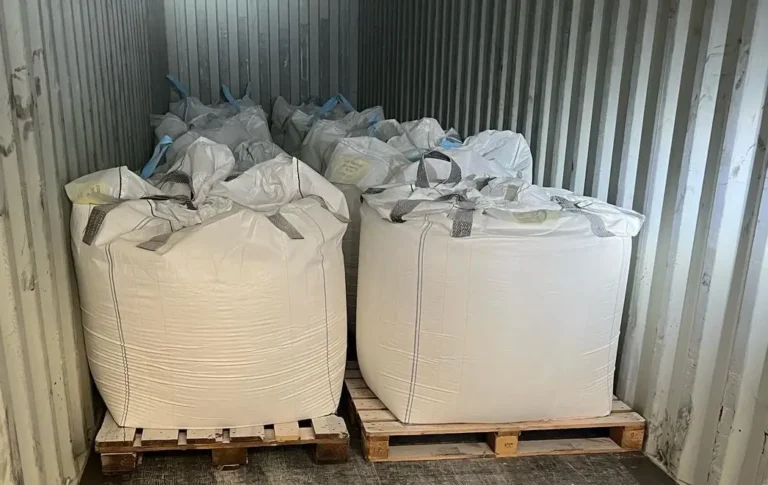
What is dolomite?
Dolomite is a natural mineral made up of a double carbonate of calcium and magnesium. The same name is also used for the rock (dolostone) mostly composed of this mineral. Dolomite consists of roughly half calcium carbonate and half magnesium carbonate, which distinguishes it from pure calcium carbonate (calcite). It is quarried and processed by milling, screening and micronization into a wide range of particle sizes, from micronized powders to coarse aggregates. As a mineral filler —or dolomite filler— it is one of the most widely employed in composites due to its excellent balance between performance and cost.
Chemical composition and properties of dolomite
From a chemical perspective, dolomite corresponds to the formula CaMg(CO₃)₂: a double calcium and magnesium carbonate. Its main properties as a mineral filler are:
- Medium hardness (around 3.5-4 on the Mohs scale) and good chemical stability.
- Low oil absorption and excellent compatibility with resins and binders.
- Insoluble in water and chemically stable under normal conditions.
- Colour and whiteness: In its pure state, it presents white or off-white shades; whiteness is a highly valued factor in certain applications.
For industrial use, key parameters to control include particle size distribution, chemical purity (preventing impurities such as iron and manganese), whiteness and moisture content.
Types of dolomite: from micronized filler to coarse aggregates
Dolomite is supplied across a broad granulometric range covering ultrafine powders to coarse aggregates:
- Micronized dolomite or filler: a fine powder; it is the most widely used form as a mineral filler in composites, coatings, and plastics.
- Crushed and rounded dolomite: coarser grades intended for construction, mortars and concretes.
- Calcined dolomite: obtained by heating dolomite to remove CO₂, producing dolomitic lime, used in the steel industry, refractories and agriculture.
Selecting the appropiate particle size is decisive for filler behavior in the mix and the final product.
Applications and uses of dolomite
The uses of dolomite depend on its physical and chemical properties. Among the most common applications are:
- Resin sanitaryware: massively used as a bulk filler for gelcoated parts (shower trays, bathtubs and washbasins), providing body to the casting, absorbing part from the exothermic reaction heat and increasing mechanical rigidity after demouldeding. When weight reduction is the goal, dolomite is fully or partially replaced by light weight fillers.
- Polymer concrete and engineered stone: in the manufacture of drainage channels, gratings, façade panels and urban elements, dolomite acts as a fine aggregate and micronized filler to close porosity between coarse particles, improving flexural-compressive strength and mechanical impact resistance.
- Paints and coatings: as a bulk filler and to provide whiteness.
- Plastics and adhesives: as a functional filler to modify properties and lower cost.
- Rubbers and elastomers: as a reinforcing and bulk filler.
- Ceramics, terrazzo and glass manufacturing.
- Agriculture: as a source of calcium and magnesium, correcting soil acidity and improving crop yields.
- Steel industry: as a fluxing agent in metallurgical processes.
Technical advantages of micronized dolomite in composite manufacturing
Integrating our high-whiteness, high-purity dolomite fillers into your formulations brings essential operational and economic benefits during the molding process:
- Significant formulation cost reduction: acting as a dense, economical bulk filler relative to pure resin volume, it drastically reduces the cost per kilo of polymerized mass without compromising structural quality.
- High wetting and low resin absorption: Careful distribution of ultrafine and medium particles allows high filler loadings (between 68% and 75% by mass depending on resin type), maintaining optimal working viscosities suitable for filling complex molds.
- Increased density and shear modulus: provides consistency and rigidity to gelcoated parts such as shower trays, washbasins, countertops and polymer concrete parts.
- Excellent chemical inertness and thermal stability: its inert mineral nature does not interfere with peroxide or cobalt catalysis kinetics, ensuring stable gel times and uniform curing that minimizes internal stresses and prevents deformation in large-format parts.
AITANACHEM: technical support and custom particle-size selection
In composite manufacturing, there is no universal dolomite particle size. An excessively fine filler can increase viscosity and require a higher percentage of resin; conversely, a particle that is too coarse can settle during gel time (sedimentation) or cause abrasion in pumps and continuous mixers.
At AITANA CHEMICALS we assess your production process rheology, machinery type ,and target gel time to recommend the ideal micronized dolomite grain size or to develop custom mineral blends. Rigorous particle size controls guarantee homogeneity, translating into: excellent resin dispersion, minimized styrene monomer demand, reduced resin absorption and optimal fluidity during injection or mold casting.
Frequently asked questions about dolomite as a mineral filler (FAQ)
What is the difference between calcium carbonate and dolomite in resin formulations?
Although both are carbonate minerals, dolomite contains magnesium (CaMg(CO₃)₂), which gives it higher hardness (3.5-4 Mohs versus 3 for calcite), greater acid resistance and a crystalline structure that usually allows a slight viscosity reduction at the same filler loading in the mixture.
In what ratio is dolomite incorporated into polyester resin castings?
Depending on the reactivity and viscosity of the resin (orthophthalic, isophthalic or DCPD), typical dosages range between 65% and 75% by weight of the total mix. Our technical team advises you on reaching the target viscosity with a Ford cup or Brookfield viscometer.
Does dolomite affect resin gel time or curing ?
High-purity dolomite is chemically inert and does not alter peroxide or cobalt accelerator catalysis. However, a non-dried dolomite with residual moisture can delay the reaction times or cause microbubbles; that is why our fillers are supplied with strictly controlled moisture levels.
Is dolomite compatible with light weight filler (LWF) technology?
Yes, completely. In fact, in the concentrated versions of our light weight filler (LWF) technology, manufacturers use local dolomite as a coarse mineral filler to complete the formulation, saving up to 50% on international transport costs.
Which dolomite particle sizes do you offer?
We work across the entire range, from micronized powders (fillers) for composites to coarser particle distributions, selecting the most suitable option for each application.
Looking to Optimize Your Resin Formulations with Dolomite Fillers?
Our technical department is at your disposal to analyse your current mixes, send test samples of our micronized dolomites and design the particle-size adjustment according to your plant needs. For any inquiry about our dolomite fillers, contact us.
Dolomite is just one of the families in our range of mineral fillers for composites. If you wish to learn about the rest (light weight fillers, reinforcing fillers and aluminium trihydrate ATH) and how to select the right filler, consult our complete guide to mineral fillers.